
Plitvice Lakes Boardwalks: What to Expect
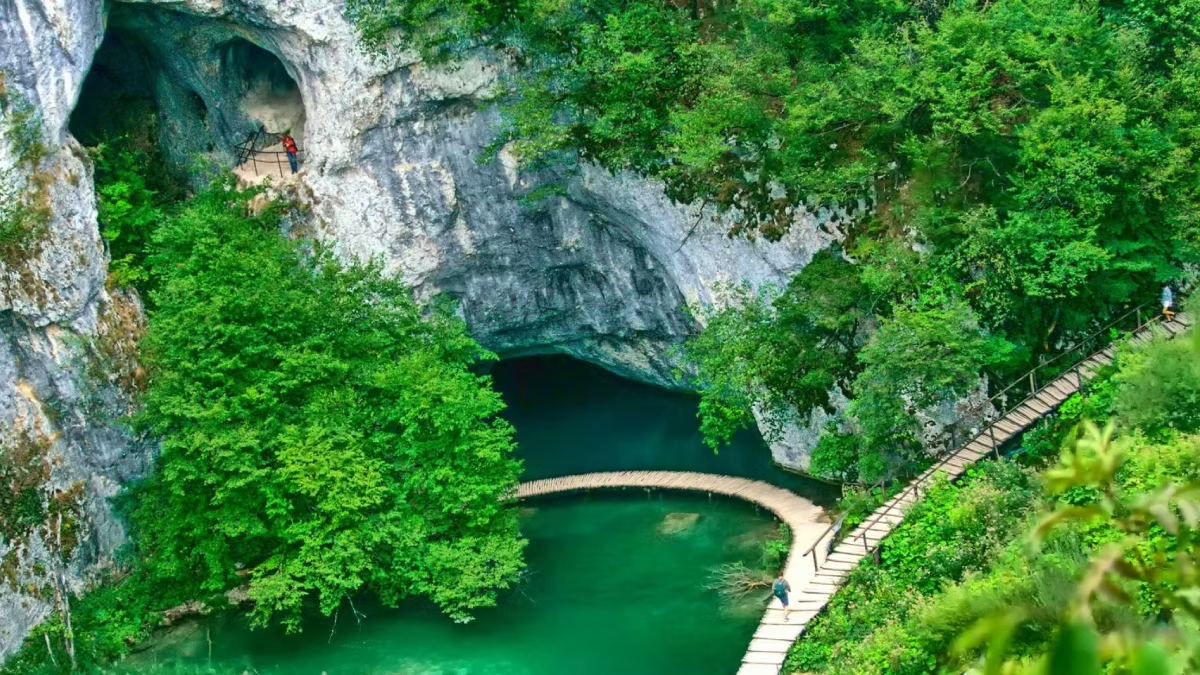
The wooden boardwalks at Plitvice Lakes National Park are narrow timber walkways built directly above the lake surfaces and beside cascading waterfalls. The full boardwalk network within the lake system spans approximately 18 km. Most sections have no railings, creating full immersion in the landscape. The boards are treated timber that can become slippery when wet. The most famous sections are in the Lower Lakes canyon, where paths cross directly above turquoise water with waterfalls on both sides. Sturdy non-slip footwear is essential. Pushchairs and prams are not permitted.
The Plitvice Lakes boardwalks are among the most distinctive walking experiences in Europe. Narrow timber walkways built directly on the lake surfaces and across cascading water — no railings on most sections, the turquoise water visible through the gaps between boards, waterfalls audible on both sides — create a sensation of being within the landscape rather than observing it from a safe distance. This guide covers everything you need to know before setting foot on them.
What the Boardwalks Are Actually Like
The boardwalk network is built in two distinct styles. The main lake-crossing sections — typically 1.5–2 metres wide — are flat, relatively stable, and produce a hollow wooden sound underfoot with the water visible below through gaps between boards. These wider sections are the most stable and comfortable to walk.
The narrower connecting sections between lakes — sometimes 1 metre wide or less — pass beside and occasionally directly over small cascades. These sections have no railings on most stretches. The sounds of water are immediate and loud on both sides. In sections where waterfalls flow beneath the boards, the vibration of the water is perceptible through the timber.
Both types can become slippery. Waterfall mist, morning dew, and general humidity in the canyon keep the boards damp even on sunny days. This is the single most important practical fact about the boardwalks: they require non-slip footwear at all times, in all seasons.
No Railings: The Design Choice
The absence of railings on most boardwalk sections is intentional. The park’s design philosophy is immersion rather than separation — visitors are meant to feel within the landscape, not protected from it. This design decision means the walking experience is genuinely distinctive from any railed path or viewing platform. It also means you need to be attentive at all times, particularly when photographing or when in crowds.
In peak season when the boardwalks are congested, the absence of railings and the two-way traffic on narrow sections requires patience and courtesy. The park standard is to keep right and allow passing from the other direction. In crowds, sudden stops for photography can cause problems on narrow no-railing sections — step to the side before stopping.
Key Boardwalk Sections
The Lower Lakes canyon crossing: The most famous and most visited section — narrow timber paths crossing directly above the turquoise Lower Lakes, with cascades visible on both sides and Veliki Slap audible ahead. This is the section that most photographs of Plitvice Lakes depict.
The Kaluđerovac boardwalk: The crossing of Kaluđerovac Lake near Entrance 1, where the path forks toward Veliki Slap. The view across the lake from this section — turquoise water, canyon walls, the sound of cascades — is one of the park’s finest moments.
The Gradinsko crossing (Upper Lakes): In the Upper Lakes section, the boardwalk crossing of Gradinsko jezero offers mirror reflections of the surrounding forest and a calmer, more open environment than the Lower Lakes.
The P2 cascade zone (near Upper Lakes boat terminal): Immediately after the boat arrives at P2, boardwalks pass through an area where waterfalls flow on multiple sides. One of the most immersive sections in the park.
Boardwalk Safety
Wear non-slip footwear: This cannot be overstated. Wet timber is slippery regardless of sun or rain. Sandals, flip-flops, and smooth-soled shoes are genuinely unsuitable and potentially dangerous. Grip-soled trainers or hiking shoes are essential.
Keep right: Two-way traffic on narrow sections requires discipline. Keep to the right and allow others to pass.
Stop to the side for photography: Do not stop suddenly in the middle of a narrow boardwalk section — particularly on no-railing sections — as it creates congestion and forces others to make awkward manoeuvres. Step to the widest part of the path before stopping.
Hold children’s hands: Small children must be held or closely supervised on all no-railing sections. There is no physical barrier between the boardwalk edge and the water.
No pushchairs or prams: The boardwalk width and surface do not permit pushchairs. Baby carriers are the only safe option for families with infants.
How Long Are the Boardwalks?
The complete boardwalk network spans approximately 18 km. You will not walk all of it on a single visit — the park’s routes use selected sections. Route A uses approximately 3.5 km of boardwalk. Route C uses the majority of the Lower Lakes boardwalk plus sections of the Upper Lakes. Route K uses almost the entire network.
Frequently Asked Questions
Are the boardwalks slippery?
Yes — they can be slippery at any time due to waterfall mist and humidity. Non-slip footwear is essential year-round.
Are there railings on the boardwalks?
Most sections have no railings. Some of the wider main crossing sections have low side barriers, but the majority of the network is open.
Can wheelchairs use the boardwalks?
The wider flat sections are accessible to wheelchairs. The narrow connecting sections and some Lower Lakes sections are not. See our accessibility guide for details.
When are the boardwalks least crowded?
At opening time — 7:00 AM in summer, 8:00 AM in other seasons. The first 60–90 minutes are dramatically quieter than the rest of the day.
