
Can You Swim at Plitvice Lakes?
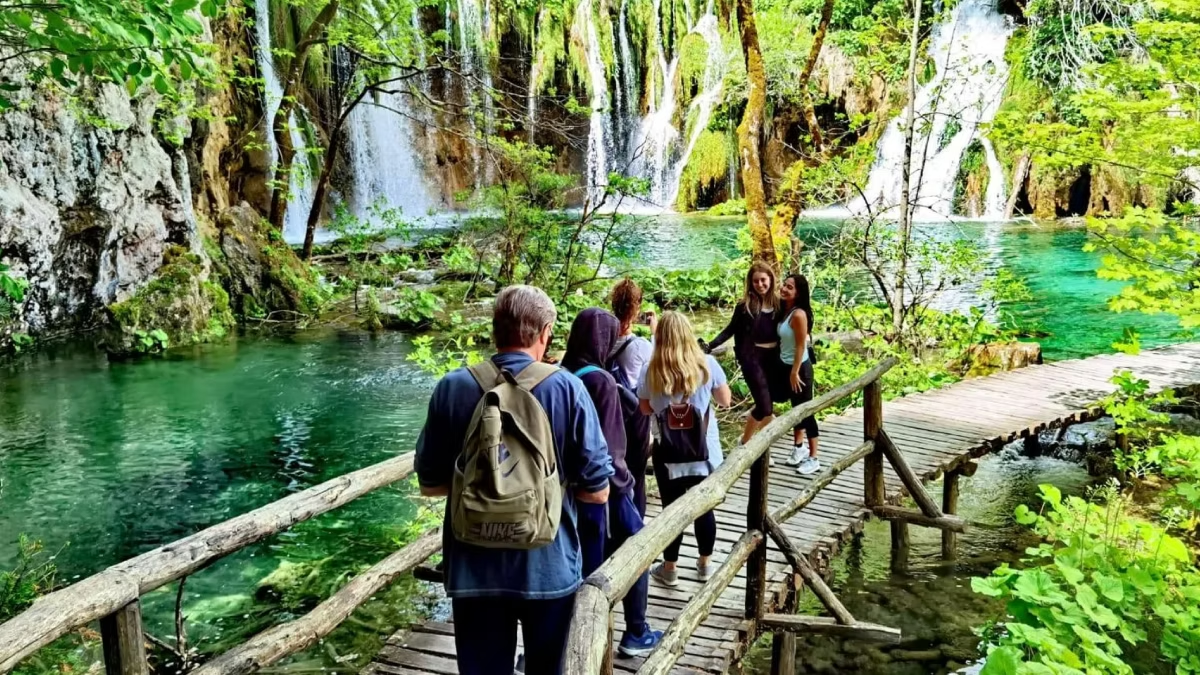
No. Swimming is strictly prohibited in all lakes, rivers, and waterways within Plitvice Lakes National Park. The ban applies to all visitors without exception and is actively enforced. The reason is ecological — the park’s unique travertine formations and fragile aquatic ecosystem are formed by a precise balance of minerals, algae, bacteria, and water chemistry. Human contact — including sunscreen, body oils, and physical disturbance — damages this system. Violators face significant fines. The nearest alternative swimming options are the Korana River and other natural spots outside the park boundary.
The answer is simple: no, you cannot swim at Plitvice Lakes. But the reason why is genuinely interesting, and understanding it changes how you see the park entirely. This guide covers the rule, the ecology behind it, how it is enforced, and where to go if you want to swim near the park.
The Rule
Swimming is prohibited in all lakes, rivers, waterfalls, and waterways within Plitvice Lakes National Park. The prohibition is total — there are no designated swimming areas, no exceptions for specific lakes or sections, and no time periods when the rule is relaxed. The official park rules state this clearly, and signs are posted throughout the park.
Dogs are also not permitted to enter the water, even though they are allowed in the park on a lead.
Why Swimming Is Banned: The Science
The swimming ban at Plitvice Lakes exists to protect the park’s extraordinary travertine formations — the natural dams and barriers that separate the 16 lakes and create the waterfalls. These formations are built by living organisms: blue-green algae, mosses, and bacteria that deposit calcium carbonate (travertine) as they grow. The process is exquisitely sensitive to chemical balance. Human contact introduces sunscreen, body oils, and microorganisms that disrupt this balance, slowing or stopping travertine growth. Physical disturbance of the lake beds also damages the fragile formations. The same sensitivity that makes the lake water so extraordinarily clear and turquoise also makes it vulnerable to human activity.
Plitvice Lakes is not simply a scenic park — it is a living, actively forming geological system. The 16 lakes are separated by travertine barriers that have been growing for approximately 15,000 years. New travertine continues to deposit today, and the waterfalls themselves are slowly changing in height and position as a result. This active geological process is the reason Plitvice was listed as a UNESCO World Heritage Site in 1979.
The water’s famous turquoise colour is a direct result of its extraordinary purity and mineral composition — the specific balance of calcium carbonate and other minerals that light interacts with to produce that colour. Any change to the water chemistry — from sunscreen, body oils, or simply the introduction of foreign microorganisms — has the potential to alter this balance and damage the formations that make the park what it is.
How the Rule Is Enforced
Park rangers patrol the boardwalks and lakeside areas throughout opening hours. CCTV cameras are installed at various points in the park. Visitors observed swimming or wading in the water face significant fines — Croatian national park rules allow for fines in the hundreds of euros for violations.
In summer, particularly on hot days when the turquoise water looks extraordinarily inviting, the temptation is real. But the fines are real too, and rangers are present and active.
Other Rules That Protect the Ecosystem
The swimming ban is part of a broader set of rules designed to protect the park:
- No drones — aerial photography by unmanned aircraft is prohibited throughout the park
- Stay on marked trails — leaving the boardwalks or marked paths is not permitted
- No collecting — picking flowers, plants, rocks, or any natural material is prohibited
- No littering — leave no trace rules apply throughout
Where to Swim Near Plitvice Lakes
If you want to combine a Plitvice Lakes visit with swimming, there are natural options outside the park boundary:
The Korana River flows through the Lika region near the park and has several natural bathing spots accessible in summer. The river near Rastoke village (approximately 25 km north on the D1) has swimming holes popular with locals.
Mrežnica River — approximately 40 km north — is one of Croatia’s most beautiful rivers for swimming, with clear blue water, natural pools, and waterfalls in a less visited setting.
The Adriatic coast is approximately 2 hours from Plitvice by car (Zadar or Šibenik direction). Many visitors combine a Plitvice Lakes day trip with a coastal base specifically to swim in the sea.
Frequently Asked Questions
What happens if you swim at Plitvice Lakes?
You risk a significant fine from park rangers. The prohibition is actively enforced, particularly in summer. Beyond the fine, swimming genuinely damages the park’s unique ecosystem.
Can you touch the water at Plitvice Lakes?
The official rules prohibit entering the water — wading, touching, or swimming. Splashing water from the boardwalk is not explicitly addressed in the rules but the spirit of the prohibition is clear: no physical contact with the lake water or lake beds.
Are there any parts of Plitvice Lakes where swimming is allowed?
No. The prohibition applies throughout the entire national park without exception.
Is the water at Plitvice Lakes actually drinkable?
The water is extraordinarily pure by most measures, but it is not officially designated as drinking water and the park does not recommend drinking it. There are no drinking water taps or fountains along the trails — bring your own.
Why is the water at Plitvice so blue and turquoise?
The colour is produced by the specific mineral composition of the water — primarily calcium carbonate — and the way light interacts with it at different depths and angles. The colour shifts from deep blue in the deepest sections to vivid turquoise in shallower areas and near cascades. It changes throughout the day as the light angle changes. This colour is a direct product of the same chemical conditions that make swimming harmful to the ecosystem.
