
Plitvice Lakes Electric Boat & Panoramic Train: What to Expect
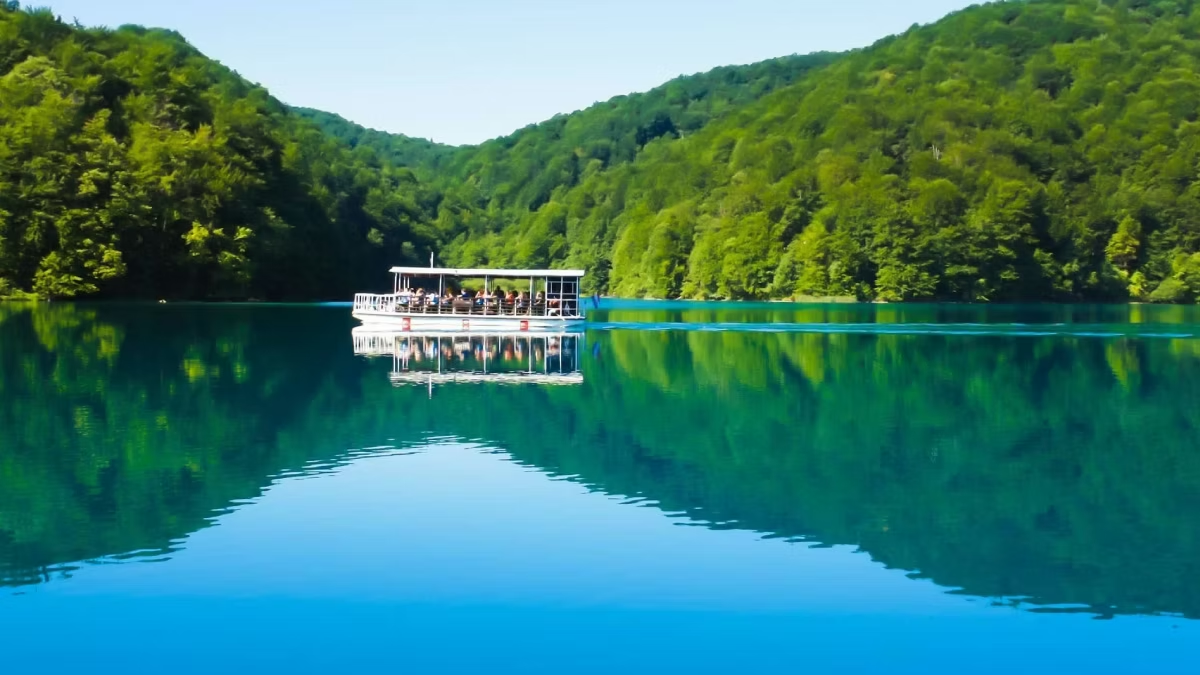
The electric boat and panoramic train at Plitvice Lakes National Park are both included in the standard admission ticket at no additional cost. The electric boat crosses Lake Kozjak — the park’s largest lake — in approximately 10–15 minutes, connecting the Upper and Lower Lakes sections. The panoramic train (actually an open-sided road train on wheels, not rail) connects the park entrances and key points along the 3 km internal road, running every 20–30 minutes. Both operate during park hours, subject to weather and season — in severe winter conditions, the boat may be suspended.
The electric boat and panoramic train are central to the Plitvice Lakes experience — not optional extras, but integral parts of how the park’s routes work. Both are included in your ticket and both solve practical problems: the boat bridges the gap between Upper and Lower Lakes that would otherwise require a long walk; the train returns you to your starting entrance without retracing the full route on foot. This guide covers everything you need to know about both.
The Electric Boat
What it is: An open-sided electric vessel — silent and emission-free — that crosses Lake Kozjak. The boat is large enough for groups of 30–40 passengers with seating on both sides.
The routes: Three terminals serve the boat:
- P1 — near Entrance 2 (Upper Lakes end of Kozjak)
- P2 — at the Upper Lakes shore (mid-lake)
- P3 — at the Lower Lakes shore (where Kozjak meets the Lower Lakes)
The main crossing used by most visitors on Routes B, C, and H is P3 to P2 (or vice versa) — approximately 10–15 minutes across the full width of Kozjak. The P1 to P2 route is a shorter crossing used by visitors arriving from Entrance 2.
What the journey is like: The boat moves silently — no engine noise, just the gentle sound of water. The lake is extraordinarily clear, with fish visible at depth throughout the crossing. Forested limestone cliffs rise on both sides. Stephanie’s Island — a small travertine formation named after Crown Princess Stéphanie of Belgium (1888 visit) — is visible near the centre of the lake.
Frequency: In peak season, boats run continuously — departing every 15–30 minutes from each terminal. In shoulder season, frequency reduces to every 30–45 minutes. In winter, the boat may be suspended — call the park to confirm.
Wait times: At the P3 terminal (Lower Lakes end, Route C direction), queues of 20–30 minutes are common in peak summer between 10:00 AM and 3:00 PM. The P2 terminal (Upper Lakes end, Route H direction) is typically less congested. Arriving at opening time dramatically reduces wait times at both terminals.
Accessibility: The boat is accessible to wheelchair users. Staff assist with boarding and alighting.
The Panoramic Train
What it is: Despite its name, the panoramic “train” is actually an open-sided road train running on wheels — a series of linked carriages pulled by a small tractor on the park’s internal road. It is not a rail vehicle. Visitors sometimes express mild disappointment at the reality versus expectation of the name — but the ride is perfectly pleasant and the views through the open sides are good.
What it does: The train connects the main park zones — Entrance 1 (near ST1 stop), Entrance 2 (near ST3), and intermediate points — running along the internal 3 km road that passes above and alongside the lake system. It is used primarily to return visitors to their starting entrance after completing the route, saving the 3 km walk back.
What you see: The train route runs through meadows and forest above the lake system, with occasional views down into the canyon and over the Upper Lakes area. It is a pleasant, relaxing final section after hours of walking — not the most visually dramatic part of the park experience, but a welcome physical rest.
Frequency: In peak season, every 20–30 minutes. In winter, less frequently and subject to suspension.
The “bus” reality: Multiple sources note that the panoramic train is functionally identical to a road bus with open sides. Don’t expect narrow-gauge railway charm — it is purely functional transport within the park. Its value is getting you back to the entrance without retracing the full route on foot.
Tips for Both
Avoid the P3 boat queue in peak season by taking Route H from Entrance 2: Route H approaches the boat via P2 (Upper Lakes side), which has shorter queues than P3 (Lower Lakes side used by Route C visitors).
Use the train for the return — walk the routes forward: The train is most useful as a return vehicle. The park’s marked routes are designed to be walked in one direction with the train completing the circuit. Walking the train route is possible but misses the lake system almost entirely.
Both are suspended in severe winter: Before a winter visit, call the park (+385 53 751 014) to confirm current operation status.
Frequently Asked Questions
Is the electric boat included in the ticket?
Yes. Both the electric boat and panoramic train are included in all standard admission tickets.
How long is the boat ride?
P3 to P2 (main crossing): approximately 10–15 minutes. P1 to P2: approximately 5 minutes.
Is the panoramic train actually a train?
No — it is an open-sided road train running on wheels on the park’s internal road. It is comfortable and practical, but not a railway.
Can I take the boat more than once on the same ticket?
The standard ticket is valid for one day. Within that day, you can use the boat as needed on your chosen route.
Does the boat run in winter?
Usually yes, on a reduced schedule — but not guaranteed. Confirm with the park before a winter visit.
