
The Upper Lakes of Plitvice: What to See & How Long It Takes
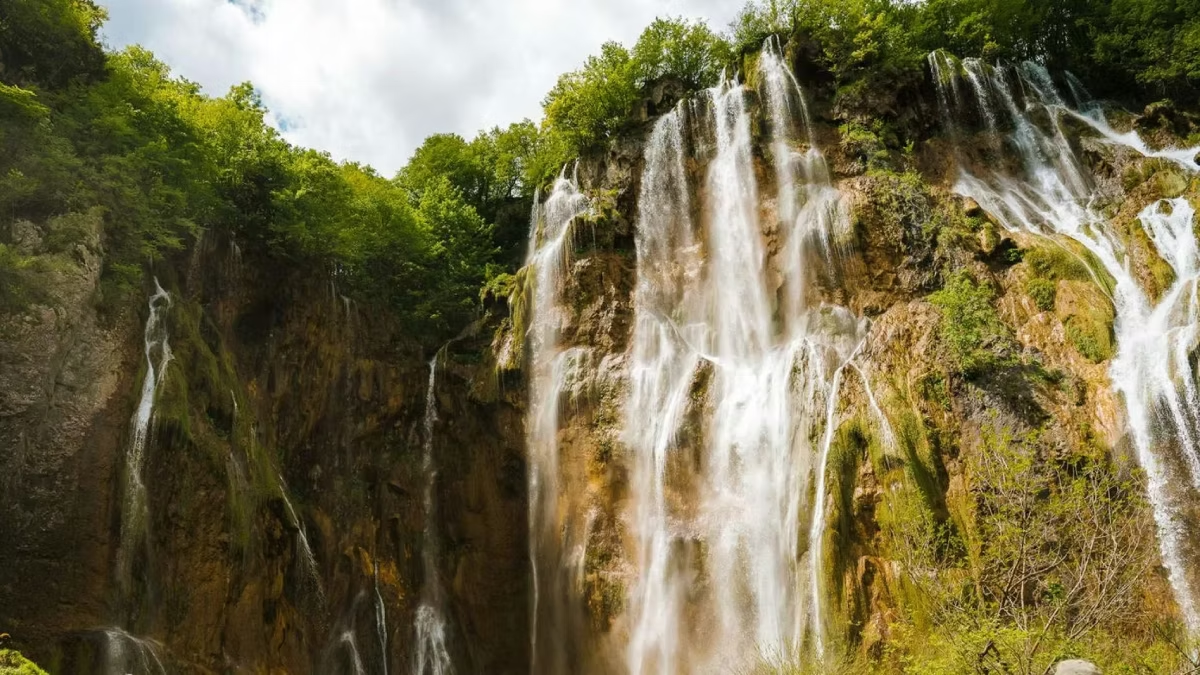
The Upper Lakes at Plitvice Lakes National Park consist of 12 lakes — Prošćansko jezero, Ciginovac, Okrugljak, Batinovac, Veliko jezero, Malo jezero, Vir, Galovac, Milino jezero, Gradinsko jezero, Burgeti, and Kozjak — formed on dolomite rock in a more open, forested landscape than the dramatic canyon of the Lower Lakes. They are generally quieter, more serene, and offer better mirror reflections of the surrounding forest. The most impressive waterfall in the Upper Lakes is Veliki Prštavac (approximately 28 metres, between Galovac and Gradinsko lakes). The Upper Lakes are accessed from Entrance 2 or by electric boat from the Lower Lakes section.
While the Lower Lakes deliver immediate drama — canyon walls, Veliki Slap, boardwalks at water level — the Upper Lakes offer a different kind of beauty: 12 lakes of varying size and colour spread across a more open, forested plateau, with gentler waterfalls, extraordinary mirror reflections, and a quality of calm that is rare in the more-visited Lower Lakes canyon. Many experienced visitors consider the Upper Lakes the more memorable half of the park.
Character and Atmosphere
The Upper Lakes were formed on dolomite — a less soluble rock than the limestone of the Lower Lakes — creating a different geological character: wider, shallower lakes with gently sloping banks rather than the steep canyon walls of the lower section. The result is a landscape that feels more open and forested, with the lakes spread across a broad plateau surrounded by beech and fir woodland.
The Upper Lakes section is consistently less crowded than the Lower Lakes, particularly early in the morning. Visitors arriving via Entrance 2 have the Upper Lakes largely to themselves for the first 60–90 minutes after opening — a profoundly different experience from the crowded Lower Lakes boardwalks at the same time.
The lake colours in the Upper Lakes tend toward deeper blues and greens rather than the vivid turquoise of the Lower Lakes, because the water is generally deeper and the light angle different. In autumn, the surrounding beech forest turns vivid red and gold, and the reflections in the still upper lake surfaces create some of the park’s most extraordinary photography conditions.
Key Sights in the Upper Lakes
Prošćansko jezero: The highest and most remote lake, where the park’s water system originates. Prošćansko is the starting point for Route K and the quietest of all 16 lakes. Early morning mist rising from its surface in autumn is one of the park’s most beautiful natural phenomena.
Okrugljak: Named for its roughly circular shape, this lake sits in a sheltered position producing mirror-still reflections in calm conditions. One of the most photographed Upper Lakes after Gradinsko.
Galovac: Home to the Veliki Prštavac and Mali Prštavac waterfalls — the Upper Lakes’ most dramatic cascades. Veliki Prštavac drops approximately 28 metres in a wide, powerful sheet from the Galovac Lake edge into Gradinsko. Visited early in the morning before tour groups arrive, it is one of the park’s finest sights.
Gradinsko jezero: One of the most visually appealing of the Upper Lakes, with a wide, clear surface that reflects the surrounding forest. The boardwalk crossing of Gradinsko is a highlight of Routes H and K.
Kozjak: The largest lake in the park at approximately 81.5 hectares, Kozjak is the dividing point between Upper and Lower Lakes and is crossed by the park’s electric boat. Despite being classified as an Upper Lake, it is the central axis of the whole park. See our Lake Kozjak guide.
The Veliki Prštavac Waterfall
The most impressive waterfall in the Upper Lakes section, Veliki Prštavac drops approximately 28 metres at the edge of Galovac Lake. Its name comes from the Croatian word prštati — meaning to splash or spray — which describes the wide, spreading cascade that fans out as it falls. In high water conditions (spring and after heavy rain) it is a genuinely spectacular sight with a permanent mist cloud visible from a distance.
Unlike Veliki Slap, which is fed by a separate river, Veliki Prštavac is a true lake-overflow waterfall — the overflow of Galovac Lake spilling to the level below. This means its volume varies more directly with rainfall and season than Veliki Slap does.
The best time to photograph Veliki Prštavac is early morning from Entrance 2 — arriving at the 7:00 AM or 8:00 AM opening and taking the first boat to P2, then following the trail to Galovac, gives you the waterfall in excellent morning light with virtually no other visitors.
How Long to Allow
The Upper Lakes alone (Route E from Entrance 2) takes approximately 2.5–3 hours. As part of the full Route H circuit (Upper and Lower Lakes), allow 4–6 hours. The most remote upper section around Prošćansko, covered only by Route K, adds another 1–2 hours.
Upper Lakes in Winter
The Upper Lakes section is closed from approximately early November to mid-March for safety reasons — the higher boardwalks become icy and unstable. If visiting in winter, only the Lower Lakes are accessible. The Upper Lakes reopen when conditions allow, typically in March or April.
Frequently Asked Questions
Are the Upper Lakes less crowded than the Lower Lakes?
Yes — consistently and significantly. The Lower Lakes canyon is the park’s busiest section. The Upper Lakes, particularly early in the morning via Entrance 2, are noticeably quieter.
Can I access the Upper Lakes without the boat?
Yes — from Entrance 2, you can walk into the Upper Lakes section directly without using the boat. The boat connects the Upper and Lower Lakes sections across Kozjak.
Is Veliki Prštavac better than Veliki Slap?
They are very different. Veliki Slap is taller and more dramatic in scale. Veliki Prštavac is wider and more intimate, with a spreading, fan-like cascade that many photographers prefer. Both are essential sights.
