
Best Time to Visit Plitvice Lakes (by Month & Season)
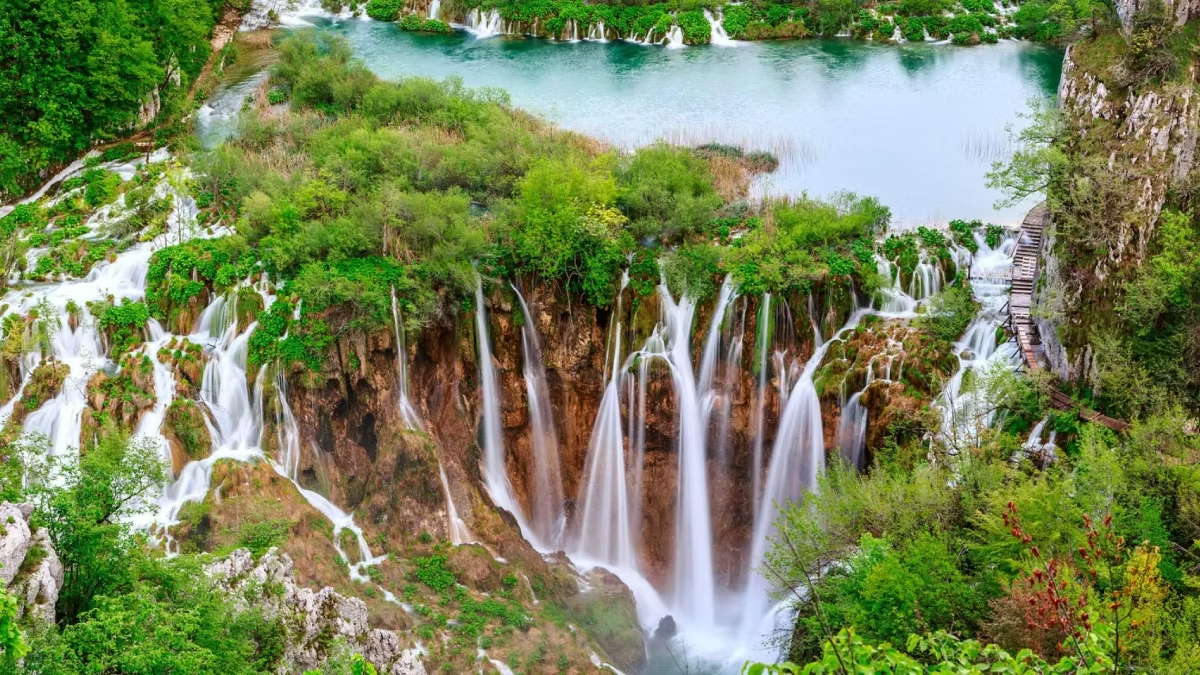
The best time to visit Plitvice Lakes National Park is May, early June, September, or October. During these months, the weather is mild (15–25°C), the waterfalls are strong, the park’s 16 lakes are at their most photogenic, ticket prices are lower than peak season, and crowds are significantly more manageable than July and August. September and October additionally offer spectacular autumn foliage. Avoid July and August if crowds concern you — the park sees up to 10,000–12,000 visitors per day in peak summer.
Plitvice Lakes National Park is open every day of the year, and each season offers a distinctly different experience. The right time to visit depends on what matters most to you: avoiding crowds, seeing the waterfalls at their most powerful, experiencing autumn colours, or finding the lowest prices. This guide breaks down every month so you can make the right decision for your trip.
Quick Summary by Season
| Season | Months | Crowds | Price | Waterfall Flow | Scenery |
|---|---|---|---|---|---|
| Spring | April–May | Low–Medium | €23 | Very high | Lush green, wildflowers |
| Peak summer | June–September | Very high | €40 | High | Vivid blue-green lakes |
| Autumn | October | Medium | €23 | Medium | Spectacular fall colours |
| Off-season | November–March | Very low | €10 | Variable | Snow, frozen waterfalls |
Spring: April and May (Recommended)
Spring — particularly May — is widely considered the best overall time to visit Plitvice Lakes. Snowmelt and spring rains feed the waterfalls, making them larger and more dramatic than at any other time of year. Temperatures are comfortable (12–22°C), the forests are vivid green, and visitor numbers are a fraction of peak summer. Ticket prices are at the shoulder-season rate of €23 per adult. The park is fully open with all routes, boat rides, and panoramic trains operating.
April brings the park back to life after winter. Snowmelt from the surrounding mountains sends exceptional volumes of water through the lake system — the waterfalls are at their most powerful and the sound of cascading water is everywhere. Early April can still be cold (8–15°C), and some trails may be partially muddy. By mid-April the conditions are reliably good.
May is the month most experienced visitors point to as the sweet spot of the year. Temperatures settle into the 15–22°C range, the forest canopy is fully out, wildflowers are blooming in the meadows, and the lakes have their characteristic vivid turquoise-to-emerald colour spectrum. Visitor numbers are well below summer peaks but the park is fully serviced with all facilities open. If you can visit in May, this is the best month.
Early Summer: June (Good, but Book Early)
June offers excellent conditions — long days, warm temperatures (18–26°C), lush greenery, and strong waterfall flow. The main trade-off is that June marks the beginning of the peak season: ticket prices rise to €40 per adult, and the park begins to fill with day-trippers from the coast. Early June (the first two weeks) retains something of the May atmosphere; from mid-June onwards, crowds build noticeably.
Practical note for June: Book your tickets at least 7–14 days in advance. Morning entry (opening time is 7:00 AM in June) is strongly recommended — tour groups from Zagreb, Split, and Zadar typically arrive between 9:30 and 10:30 AM and the boardwalks become congested by midday.
Peak Summer: July and August (Beautiful but Very Crowded)
July and August are the most crowded months at Plitvice Lakes, with up to 10,000–12,000 visitors per day. The park’s narrow boardwalks become bottlenecked, particularly between 10:00 AM and 3:00 PM. Ticket prices are at their highest (€40 per adult, or €25 for entry after 4:00 PM). The park is beautiful in summer — warm, full of colour, with long days — but the crowd experience can be frustrating. If visiting in July or August, book tickets 2–4 weeks in advance and arrive at the 7:00 AM opening to have any meaningful chance of a quieter experience.
The summer advantage is the combination of warm weather, the longest daylight hours of the year, and the lake colours at their most saturated. The disadvantage is the sheer volume of visitors — a UNESCO World Heritage Site that can feel like a theme park between 10:00 AM and 4:00 PM in high season. If summer is your only option, the after-4:00 PM discounted ticket (€25 per adult) is worth considering — you get less time in the park, but far fewer crowds.
Autumn: September and October (Highly Recommended)
September is arguably the second-best month to visit Plitvice Lakes — for some visitors, the best. The summer crowds thin significantly from the first week of September. Temperatures are still pleasant (15–22°C). The waterfall volume remains strong. And the lakes retain their extraordinary colour. From mid-September, the forest begins its autumn transition — by October, the beech and fir trees around the lakes display deep reds, oranges, and yellows that reflect in the water in ways no other season replicates.
October brings the best autumn colour and the most tranquil atmosphere of any month in the warmer half of the year. Ticket prices drop back to the shoulder-season rate of €23 per adult. The light in October — lower in the sky, softer — is exceptional for photography. The only consideration is that some facilities may reduce hours toward the end of the month, and the panoramic train and boat may operate on a reduced schedule in poor weather.
For wildlife spotters: Autumn is the best season to see the park’s fauna. The thinning crowds and quieter atmosphere mean bears, deer, and a wide variety of birds are more likely to be seen near the trails. October is deer rutting season — an extraordinary experience in the forests surrounding the Upper Lakes.
Winter: November through March (Magical but Limited)
Plitvice Lakes in winter offers a completely different experience: snow-covered boardwalks, frozen or partially frozen waterfalls, ice formations over the travertine barriers, and almost no other visitors. Ticket prices drop to €10 per adult — the lowest of the year. The Upper Lakes section typically closes for safety in winter; only the Lower Lakes remain accessible. Opening hours are shorter (8:00 AM to 4:00 PM ticket sales), and the electric boat and panoramic train may not operate in severe cold. The experience is magical for those prepared for it, but requires warm clothing and flexibility.
Winter visitors describe Plitvice as an entirely different park — slower, quieter, ethereally beautiful. The waterfalls partially freeze into ice sculptures. Snow covers the boardwalks (which are gritted for safety). The lakes take on a steel-grey and white character that is utterly unlike the summer palette. January and February are the coldest months (average -2 to 5°C); March sees snow beginning to recede and the first hints of spring.
Practical notes for winter: Check the official park website or call the park directly (+385 53 751 015) before visiting — some routes may be closed due to ice. Bring waterproof boots with good grip, multiple warm layers, and expect a shorter visit. The off-season ticket price of €10 per adult makes this the most affordable time to visit by a significant margin.
Best Time of Day to Visit (Any Season)
Regardless of when you visit, arriving at the park’s opening time dramatically improves your experience. In summer this means 7:00 AM; in shoulder and off-season it means 8:00 AM. The first 90 minutes after opening are consistently the quietest of the day — the boardwalks are uncrowded, the light is soft and excellent for photography, and the birdsong is audible without competition from tour groups.
The second-best window is late afternoon (after 4:00 PM in summer) when tour groups have departed and the evening light catches the lakes from a lower angle. This window is smaller in shoulder season and unavailable in winter when the park closes earlier.
Month-by-Month Snapshot
| Month | Temp (avg) | Crowds | Ticket | Notes |
|---|---|---|---|---|
| January | -2 to 4°C | Minimal | €10 | Frozen waterfalls, limited access |
| February | 0 to 6°C | Minimal | €10 | Snow and ice, magical atmosphere |
| March | 4 to 12°C | Low | €10 | Spring thaw beginning |
| April | 8 to 17°C | Low–Med | €23 | Strong waterfalls, good conditions |
| May | 13 to 22°C | Medium | €23 | Best overall month |
| June | 17 to 26°C | Med–High | €40 | Lush green, book early |
| July | 20 to 29°C | Very high | €40 | Peak crowds, arrive at opening |
| August | 19 to 28°C | Very high | €40 | Same as July |
| September | 15 to 24°C | Medium | €40 | Excellent conditions, thinning crowds |
| October | 10 to 18°C | Low–Med | €23 | Autumn colour, great photography |
| November | 5 to 12°C | Low | €10 | Quiet, some route closures possible |
| December | 0 to 7°C | Minimal | €10 | Winter atmosphere, limited services |
Frequently Asked Questions
When are Plitvice Lakes least crowded?
November through March, and weekdays in April, May, and October. Within any season, the first hour after opening and the final hour before closing are always the least crowded times of day.
When are the waterfalls biggest?
April and May, when snowmelt from the surrounding mountains combines with spring rainfall to maximise water volume through the lake system.
Is Plitvice worth visiting in winter?
Yes — for visitors who appreciate solitude, extraordinary winter landscapes, and the lowest ticket prices of the year. The Upper Lakes section typically closes in winter, and some services are reduced, but the Lower Lakes remain accessible and are extraordinarily atmospheric in snow and ice.
When do the autumn colours peak?
Mid-October to early November. The exact timing varies by year depending on temperature patterns, but mid-October is the reliable window for the best combination of colour and mild weather.
Is summer too crowded to enjoy?
It depends on your tolerance for crowds and your willingness to arrive at opening time. Arriving at 7:00 AM and following Route H (which begins at Entrance 2 and progresses top-down through the Upper Lakes before reaching the busier Lower Lakes) gives a significantly better summer experience than arriving mid-morning.
