
Wildlife at Plitvice Lakes: Bears, Wolves & What You Might See
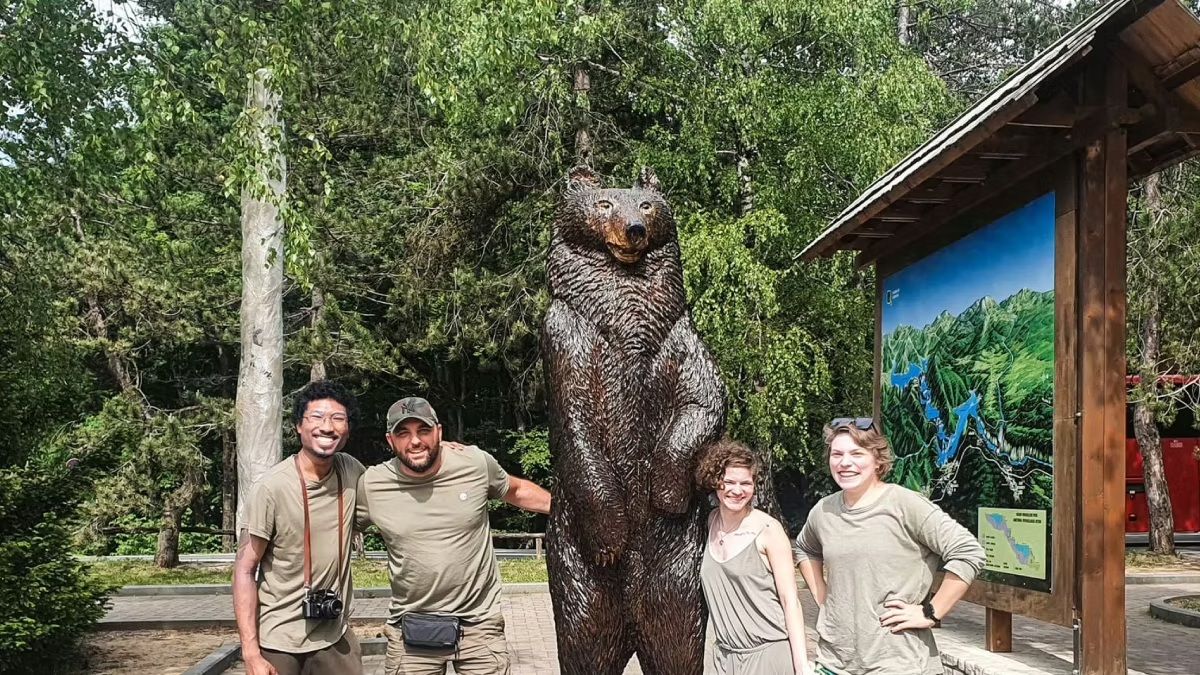
Plitvice Lakes National Park is home to approximately 50 brown bears, a healthy grey wolf population, Eurasian lynx, red deer, roe deer, wild boar, and over 120 species of birds. The park’s 16 lakes teem with brown trout clearly visible through the crystal-clear water. Large mammals rarely approach the main trails in summer, but are more active near the park edges in early morning and at dusk. Autumn is the best season for wildlife observation — deer rutting season occurs in October, birds are migrating, and the reduced crowds make wildlife encounters more likely. Over 300 butterfly species have been recorded in the park.
Plitvice Lakes National Park is famous for its lakes and waterfalls, but its ecological credentials are equally remarkable. The park’s 296 km² of forested karst landscape supports one of the most diverse and intact wildlife communities in central Europe — including populations of large predators that have disappeared from most of the continent. This guide covers the key species and the best strategies for seeing them.
Brown Bears
Plitvice Lakes National Park is home to approximately 50 European brown bears — one of the highest densities of bears in Croatia’s national parks. The bears inhabit the forested areas surrounding the lake system and generally avoid the main visitor trails. Encountering a bear on the park’s boardwalks or main paths during the day is extremely rare. Bears are most active at dawn and dusk and are more likely to be seen on the park’s perimeter trails and in the quieter sections accessed by Route K. The Lika region surrounding Plitvice has one of the strongest bear populations in central Europe.
Plitvice’s bears are present but shy. The combination of dense forest and ample natural food (the park contains 30% of all Croatian plant species — a remarkable flora diversity) means the bears have little reason to approach the visitor trails. The experience of knowing bears are present in the forest you are walking through is part of what makes Plitvice a genuinely wild place rather than a managed park.
Best chance of encountering a bear: Very early morning or late evening in the quieter sections of the park — the forested areas accessed by Route K and the upper trails above the lake system. In autumn, when deer are rutting and the forest is in colour, bears are more active. In winter, bears hibernate — sightings are not possible.
Grey Wolves
The grey wolf was extirpated from most of western and central Europe but has maintained a population in the Dinaric karst region that includes Plitvice Lakes. Wolf packs roam the forested areas of the park and the surrounding Lika mountains. As with bears, they avoid the main visitor areas during the day.
Wolf howling can occasionally be heard in the quiet early morning hours — particularly in the forests near the Upper Lakes and on the park’s western perimeter. This is more acoustic than visual, but it is one of the park’s extraordinary natural experiences.
Eurasian Lynx
The Eurasian lynx is present in the park’s forests but is nocturnal and extremely secretive. Sightings are vanishingly rare even for park rangers. Its presence is monitored by camera traps in the forest interior.
Deer and Wild Boar
Red deer and roe deer are the large mammals most frequently seen by visitors. They inhabit the forest edges and meadows surrounding the lake system and can be seen at dawn and dusk near the Upper Lakes and on the quieter sections of Route K.
October is the best month for deer: The red deer rut occurs in September–October — stags are vocal and active, and their bellowing can be heard in the forest at dawn. The thinning canopy in autumn also makes deer easier to spot through the trees.
Wild boar are present but nocturnal and rarely seen on the main trails.
Birds
Plitvice Lakes has been recorded as home to over 120 bird species. Visitors on any route can expect to hear woodpeckers (great spotted, black, and middle spotted woodpecker all breed in the park), great grey owls in the old forest sections, kingfishers along the lake edges, grey herons on the quieter shorelines, and — in the aquatic sections — dippers walking underwater on the lake bottom.
Autumn migration brings additional species through the park. Combined with the reduced crowds and quieter conditions, September–October is the peak season for birdwatching.
Fish
The fish are impossible to miss. The lakes are so extraordinarily clear that trout and other species are visible swimming at depths of several metres from the boardwalk directly above. The park’s fish are protected — no fishing is permitted — and they are consequently abundant and unafraid of human presence. Watching large brown trout hold position against the current in the shallower sections is one of the park’s most consistently engaging sights.
Plant Life
The park contains approximately 1,400 plant species and subspecies — roughly 30% of all Croatian flora. Old-growth beech and silver fir forest covers much of the park, with trees over 700 years old in the most protected sections. Rare orchids, sundews, and endemic plant species are present in the meadow and wetland areas.
Wildlife Observation Tips
Go early: Large mammals are most active at dawn. Entering the park at opening time gives the best chance of quieter sections and undisturbed wildlife.
Use the quieter routes: Route K and the upper perimeter trails are significantly less visited than Routes A, B, and C. Wildlife sightings are more likely away from the main boardwalk crowds.
Be quiet: Conversation and group noise deter wildlife. Solo or small group visits in the early morning produce the best encounters.
Autumn is the best season: Reduced crowds, the deer rut, migrating birds, and the active feeding behaviour of bears preparing for winter all combine to make September–October the optimal wildlife observation window.
Frequently Asked Questions
Is it dangerous to visit Plitvice because of bears and wolves?
No. Brown bears in the Dinaric region have extensive experience of humans and actively avoid contact. Wolf encounters on the main trails are essentially unheard of. The park is safe for visitors following normal outdoor common sense — do not approach or feed any wildlife encountered.
What is the most commonly seen animal at Plitvice?
The brown trout, visible in the lake water from the boardwalks. Among mammals, deer are most frequently seen. Birds — particularly woodpeckers and kingfishers — are reliably present.
Can I do a wildlife-specific tour at Plitvice?
The park does not offer official wildlife tours. The private guided tour option (Lower and Upper Lakes) includes knowledgeable guides who can discuss the park’s ecology and fauna in detail.
