
Plitvice Lakes Photography Guide: Best Spots & Times
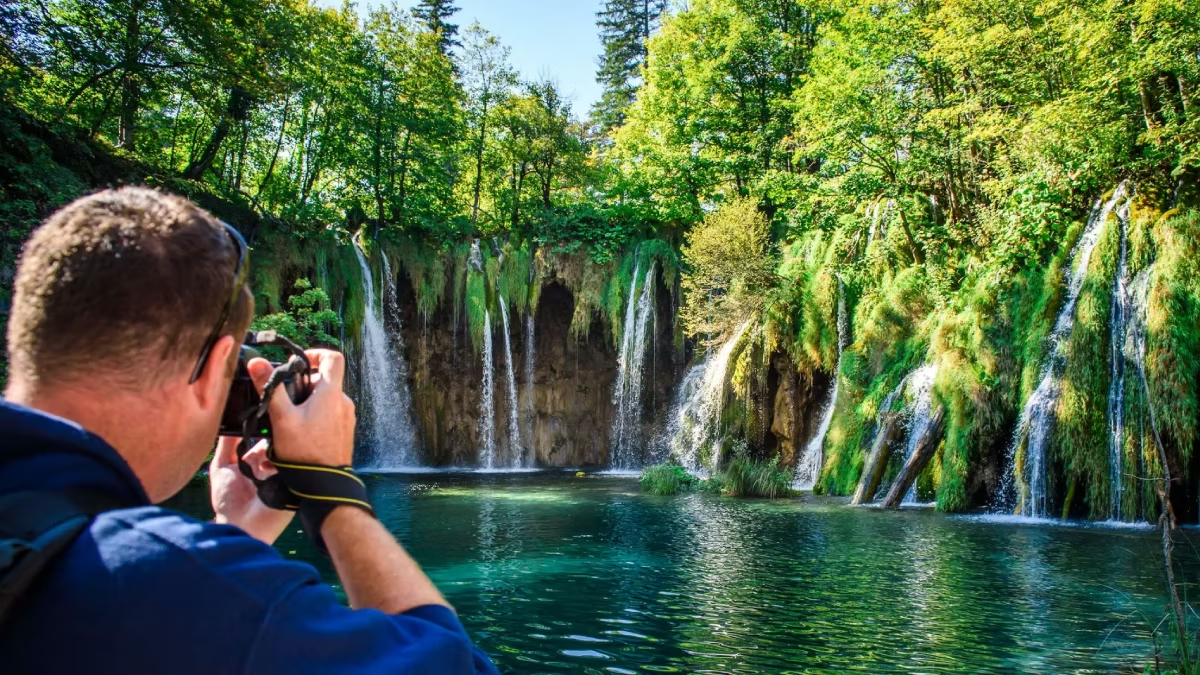
The best photography spots at Plitvice Lakes are the elevated canyon viewpoint 50 metres from Entrance 1 (for the classic postcard view of Veliki Slap and the Lower Lakes), the Lower Lakes boardwalks at water level for intimate cascade shots, the Upper Lakes at the P2 boat terminal for mirror-still lake reflections, and the cliff-top path above the canyon for aerial perspectives. The best time for photography is early morning at opening time, when the light is soft, crowds are minimal, and morning mist sometimes rises from the Upper Lakes. Overcast conditions are often better than harsh sunshine for waterfall long-exposures. Drones are strictly prohibited throughout the park.
Plitvice Lakes National Park is one of the most photographed places in Europe — and with good reason. The combination of extraordinary turquoise lakes, cascading waterfalls, wooden boardwalks at water level, dense beech and fir forests, and a landscape that changes dramatically with every season delivers a visual richness that rewards serious photographers and casual phone shooters equally. This guide covers the specific spots, timing, light conditions, and practical rules that will help you get the best images.
Rules Every Photographer Must Know
Before covering spots and timing, two rules that affect photographers directly:
Drones are strictly prohibited: The use of any unmanned aerial vehicle for photography or any other purpose is banned throughout the national park. This is enforced. Do not bring a drone.
Tripods are permitted but require patience: You can use a tripod on the boardwalks and paths. In peak season, finding a 30-second window without other visitors walking through your frame requires patience and timing — early morning or the quietest sections of Route K are where tripod work becomes most feasible. In off-season, tripod use is much easier.
Best Photography Spots
1. The Classic Canyon Viewpoint (Entrance 1)
The most famous view at Plitvice Lakes — reproduced in almost every guide, magazine feature, and travel photograph of the park — is taken from a viewpoint approximately 50 metres down the main path from Entrance 1. From here you look out over the Lower Lakes canyon, with Veliki Slap waterfall prominent on the right and the lower lake system spreading below. This is the “postcard view” of Plitvice.
A second, similar viewpoint exists on the zigzag switchback path further down toward the canyon floor. Both offer elevated perspectives before you descend to water level.
Best light: Morning in summer (when the canyon fills with light from the east). Overcast days prevent harsh shadows across the canyon. Afternoon light in summer can be good when the whole canyon is illuminated, as opposed to morning when part is in shade.
2. The Lower Lakes Boardwalks (Water Level)
The wooden boardwalks directly above the turquoise water of the Lower Lakes are the park’s most intimate photography environment. Walking at water level, you are literally centimetres from cascades that flow between the lake sections. The small waterfalls that feed lake to lake — often just 1–3 metres high but extraordinarily clear — make excellent subjects for long-exposure work.
Best shots: The boardwalk junction near Kaluđerovac Lake, where paths split toward Veliki Slap, offers a pleasing composition looking back across the split of the boardwalk. The sections near Gavanovac and Milanovac Lakes have dense cascade views that work well with a circular polarising filter to reduce surface reflections and deepen the lake colour.
Best light: Overcast conditions are superior to bright sunshine for Lower Lakes boardwalk photography — the canyon walls create strong contrast in direct sunlight that digital sensors struggle to handle. On cloudy days, the exposures are more even and the long-exposure blur of the waterfalls is easier to achieve without neutral density filters.
3. Veliki Slap — The Great Waterfall
At 78 metres, Croatia’s tallest waterfall is a photographic centrepiece. The standard view is from the boardwalk at its base, looking up. A less-visited but more rewarding viewpoint is accessible by taking the stepped path up the left side of the falls (heading away from the waterfall after visiting the base), continuing through the cave above, then following the cliff path approximately 150 metres to a small unmarked path on the right. This leads to an elevated lookout offering a view down over both Veliki Slap and the Sastavci waterfalls together — one of the park’s finest compositions and one that far fewer visitors discover.
4. Upper Lakes — Mirror Reflections and Morning Mist
The Upper Lakes offer a photographically different experience from the Lower Lakes. Larger, shallower, and more open to the sky, they produce extraordinary mirror reflections of the surrounding forested mountains, particularly in early morning calm before any wind develops. The section around Prošćansko and Gradinsko lakes is especially still.
The Upper Lakes at Plitvice are the best section of the park for early morning photography. In autumn particularly, first light on the Upper Lakes is accompanied by low mist rising from the water surface, with the surrounding beech forest beginning to change colour. This combination — turquoise water, autumn reds and golds, and morning mist — is considered by many photographers to be the park’s finest hour. The first boat of the day from Entrance 2 in September and October times with or just after sunrise, giving photographers a near-empty park for the first 60–90 minutes.
5. The Cliff-Top Path — Aerial Perspectives
Above the Lower Lakes canyon, a cliff-top walking path (accessed by climbing from the D1 road area above Entrance 1) offers aerial views directly down over the Lower Lakes boardwalks and lake system. This perspective — looking down at the turquoise water, wooden paths, and canyon walls — is the “bird’s eye” view of the park. It is less visited than the boardwalks themselves and offers a completely different compositional angle.
6. The P2 Boat Terminal — Upper Lakes Cascades
Just after arriving at the P2 boat terminal from the Lake Kozjak crossing, the boardwalks immediately above the terminal pass through an extraordinary close-range cascade zone. Waterfalls flow on multiple sides, and the wooden paths cross directly over rushing water. This is one of the park’s most immersive photography locations — you are surrounded by moving water on all sides.
Best Times for Photography
Early morning (opening time): The single best photography window at Plitvice in every season. In summer, the 7:00 AM opening gives you soft, low-angle light and virtually no other visitors for the first 90 minutes. In autumn, opening time coincides with or shortly follows sunrise, producing the mist and golden light that make the Upper Lakes extraordinary.
Overcast days: Counter-intuitively, overcast conditions are often better for Plitvice photography than sunshine. Even light with no harsh shadows allows you to expose correctly across both the dark forest sections and the bright lake surfaces. Long-exposure waterfall blur is easier to achieve without the strong contrast that direct sunlight creates. A dedicated photography trip to Plitvice is well-served by planning for a cloudy morning.
Autumn (October): Mid-October is widely considered the peak photography season. The beech forests display deep red and gold foliage that reflects in the turquoise water. The light is lower in the sky, softer and warmer. Crowds are significantly reduced compared to summer. Waterfalls remain strong from October rainfall.
Winter: Frozen waterfalls, snow-covered boardwalks, and the extraordinary contrast of ice-blue formations against white snow create images that are impossible to produce in any other season. The park is nearly empty, tripod use is easy, and the €10 admission price makes extended stays affordable. See our winter guide for full details.
Spring (April–May): Snowmelt produces the highest waterfall volumes of the year. The forest is vivid spring green. Early morning light catches the full-volume cascades beautifully.
Camera and Technique Tips
Circular polarising filter: Essential for reducing surface reflections on the lake water and deepening the turquoise and blue colours. The effect is most pronounced on bright, partially cloudy days and when shooting at a 90-degree angle to the sun.
Neutral density filter (6-stop or 10-stop): Allows long-exposure waterfall blur even in daylight. In overcast conditions a 3–6 stop ND is often sufficient. In direct summer sunshine, a 10-stop ND gives you usable shutter speeds of 1–4 seconds for waterfall blur.
Wide angle lens: The most useful focal length for the canyon viewpoints and boardwalk close-up shots. A 16–35mm equivalent captures the full scale of the canyon and the immersive sensation of the Lower Lakes section.
Telephoto lens: Useful for isolating specific cascade sections, compressing the forest reflections in the Upper Lakes, and photographing fish and birds (the park’s large trout are clearly visible through the water and make excellent subjects).
Shutter speed for waterfalls: 0.5–2 seconds produces a classic silky blur. 1/500s or faster freezes individual water droplets. Both are valid artistic choices; the silky blur is the more conventional treatment for travel photography.
Frequently Asked Questions
Can I use a tripod at Plitvice Lakes?
Yes — tripods are permitted. In peak season, using one requires patience to wait for clear windows without other visitors walking through the frame. Early morning and off-season are the most practical times for tripod work.
Are drones allowed at Plitvice Lakes?
No. Drones are strictly prohibited throughout the national park. This is enforced with fines.
What is the best season for photography at Plitvice?
October for autumn colour and manageable crowds. May for maximum waterfall volume and lush spring green. Winter for frozen waterfalls and solitude. Each season produces fundamentally different images.
What is the classic “postcard” viewpoint?
Approximately 50 metres down the main path from Entrance 1, looking over the Lower Lakes canyon with Veliki Slap visible on the right. It is the most reproduced view of the park.
