
Rastoke Village: The Watermills Near Plitvice Lakes
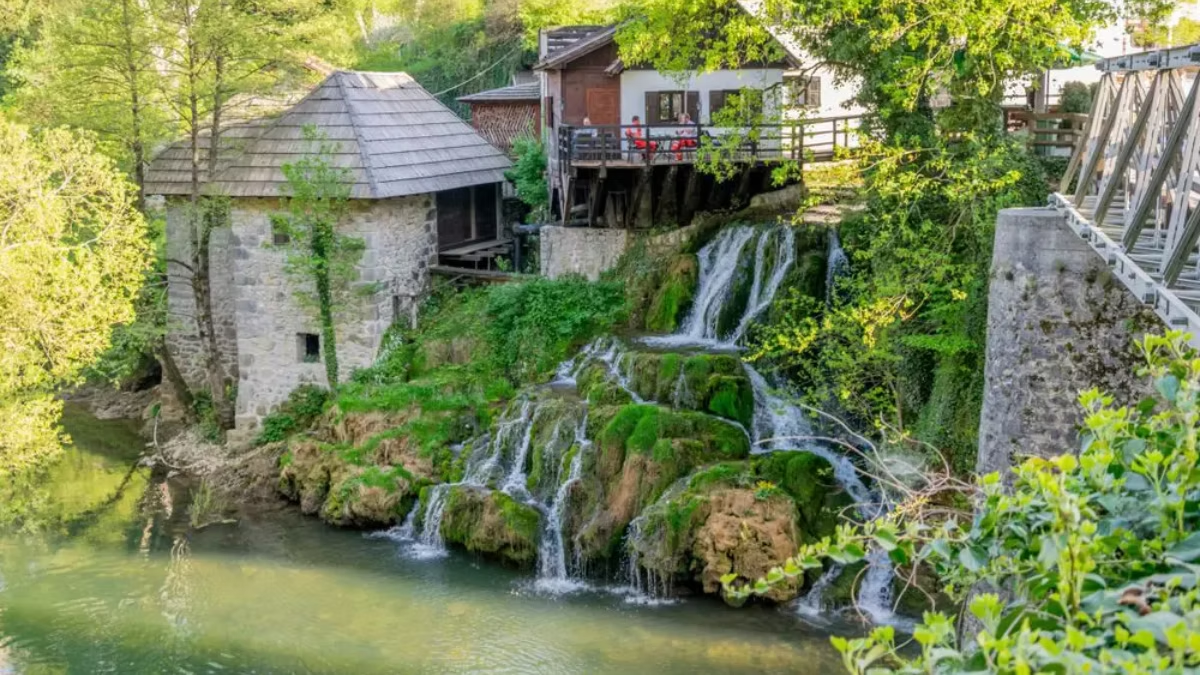
Rastoke is a small historic village in the town of Slunj, approximately 25 km north of Plitvice Lakes on the D1 national road. It sits at the confluence of the Slunjčica and Korana rivers, where traditional Croatian stone and wooden millhouses were built directly over and around a network of small waterfalls and cascades. Often called “Little Plitvice” for its turquoise water and cascading falls, Rastoke is a UNESCO-listed cultural and natural heritage site. Many guided tours from Zagreb to Plitvice Lakes include a 30–45 minute stop at Rastoke. Entry to the main walking area requires a small fee (approximately €2–3).
Rastoke sits on the route between Zagreb and Plitvice Lakes — close enough to make it a natural stop on the journey — and offers something the national park cannot: a human story embedded in the same turquoise-water, waterfall landscape. Traditional millhouses built directly over cascades, wooden waterwheels still turning in some properties, and the intimate scale of a village where people have lived with the water for centuries make Rastoke a compelling counterpoint to the UNESCO wilderness of Plitvice.
What Makes Rastoke Special
Rastoke developed over several centuries at the point where the Slunjčica river drops into the Korana river through a series of travertine cascades — the same geological process that created Plitvice Lakes, on a smaller and more intimate scale. The village’s distinctive character is the direct product of this geography: millhouses were built over the water channels to harness the water power, their foundations rising directly from the travertine rock, their interiors separated from the rushing water below by only the timber floorboards.
The resulting settlement is unlike anything else in Croatia. Walking through Rastoke you pass between houses with waterfalls running under their foundations, cross wooden footbridges over cascades, and find viewpoints where the turquoise water drops in multiple channels between the old stone buildings. At its best — particularly in spring when water volumes are highest — it has a magical quality that justifies the “Little Plitvice” comparison.
Getting There
By car: Rastoke is on the D1 national road in Slunj, approximately 25 km north of Entrance 1 at Plitvice Lakes. GPS coordinates for the Rastoke car park: approximately 45°06’00”N 15°35’42”E. There is a small paid car park at the village entrance.
By guided tour: The most popular guided tours from Zagreb to Plitvice Lakes include a stop at Rastoke. The Plitvice & Rastoke Guided Day Trip from Zagreb is the main version — see our tour review.
By bus: Buses between Zagreb and Plitvice Lakes stop in Slunj, from which Rastoke is a short walk. This requires timing your connection carefully — discuss with the driver before your trip.
What to See
The watermill houses: The historic millhouses are the village’s defining sight — buildings whose lower levels are built directly over the water channels, with cascades visible through their interiors in some properties. Several are open to visitors and serve as restaurants, cafes, or accommodation.
The Slunjčica cascades: The river’s drop through the village produces multiple small waterfalls ranging from 1 to several metres — all accessible from the walking path through the village. The sound of water is constant throughout.
The confluence viewpoint: At the point where the Slunjčica meets the Korana river, a viewpoint shows both the village cascades and the start of the Korana canyon below. The Korana river here is the same river that exits Plitvice Lakes at Novakovića Brod — connecting the two sites geologically.
The old watermill: One preserved watermill is open to visitors, with the original wheel and grinding mechanism visible. The combination of working machinery and flowing water makes it one of the most engaging historical exhibits in the Lika region.
How Long to Allow
Most guided tours allow 30–45 minutes at Rastoke — enough for a walk through the main path, a coffee at one of the waterside cafes, and a few photographs. Independent visitors with more time can take 1–1.5 hours to explore the village thoroughly, including the upper viewpoint and the watermill.
Eating at Rastoke
Several restaurants in the village serve local Lika cuisine — lamb, trout, and other regional specialties — with outdoor terraces directly over the water. The setting is one of the most atmospheric restaurant environments in Croatia. Reservations are recommended in peak season.
Frequently Asked Questions
Is Rastoke worth stopping at on the way to Plitvice?
Yes — for most visitors it is. The 30–45 minute stop adds meaningful cultural and visual depth to what is otherwise a purely natural-landscape day. The contrast between Rastoke’s intimate human-built-with-water character and Plitvice’s vast UNESCO wilderness is genuinely enriching.
Does Rastoke charge an entry fee?
A small fee (approximately €2–3 per adult) is charged to enter the main walking path through the village. Some properties are viewable from outside without payment.
What is the best time to visit Rastoke?
Spring (April–May) when water volumes are highest and the cascades are at their most powerful. The village is also beautiful in autumn colour. Summer is the busiest period.
